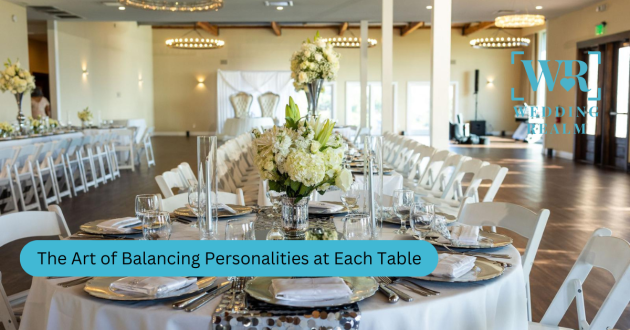
Balancing personalities at each wedding table is one of the most subtle, yet most impactful aspects of your reception planning. It’s the difference between tables filled with lively conversations, genuine connections, and shared laughter — and tables where guests feel uncomfortable, disconnected, or unsure how to engage. While décor, food, and music shape the visual and emotional tone of your celebration, the energy at each table shapes the experience your guests carry with them.
Finding the right blend of personalities isn’t about assigning labels — it’s about understanding people’s social comfort zones, communication styles, and the relationships they have with one another. A carefully curated seating arrangement makes every guest feel welcome and at ease, no matter how well they know the other people at their table.
Here is your complete guide to mastering the art of balancing personalities and intentionally creating tables that feel warm, inclusive, and joyful.
1. Start by Understanding the Types of Personalities in Your Guest List
Creating balanced tables begins with recognizing the variety of personalities attending your wedding. No two guests interact the same way, and identifying their social tendencies helps you place them where they’ll thrive.
Common personality types to consider:
The Extroverts
Outgoing, energized by social interaction, and always ready to spark a conversation. These guests help keep a table lively and engaged.
The Introverts
Thoughtful and observant, introverts enjoy meaningful, calm conversations with smaller groups. They appreciate a gentle environment where they don’t feel overwhelmed.
The Storytellers
These are the guests who love sharing anecdotes and bringing humor to any conversation. They keep the table entertained — but benefit from being paired with good listeners.
The Peacekeepers
Diplomatic, calm, and kind. They help maintain balance and diffuse awkwardness in any setting.
The Listeners
Attentive and supportive, listeners round out the dynamic and help more expressive guests feel heard.
Understanding how these personalities complement or contrast each other allows you to create tables that feel unified and comfortable.
2. Build Tables Around Shared Interests and Natural Compatibility
Rather than seating guests purely based on how you know them — such as “all coworkers together” or “all cousins at one table” — focus on deeper compatibility factors that encourage natural conversations.
Consider grouping guests by:
Similar hobbies (travel, fashion, sports, books)
Comparable humor styles
Shared cultural or regional backgrounds
Life stages (newlyweds, parents, young professionals)
Compatible energy levels
Example:
A quiet childhood friend may connect more deeply with your partner’s introspective cousin than with your loud, party-loving college group.
When shared interests shape your seating choices, conversations unfold naturally and the table feels cohesive.
3. Use “Anchor Guests” to Set the Tone at Each Table
Every wedding guest list has a few individuals who naturally influence the energy around them. These anchor guests play a key role in balancing personalities.
Types of anchor guests include:
The warm conversationalist
The gentle listener
The considerate leader
The friendly social butterfly
The person who effortlessly bridges groups
How to place anchor guests strategically:
Put extroverted anchors at tables where most guests don’t know each other.
Pair thoughtful listeners with expressive storytellers.
Add calm anchors to tables with strong personalities to maintain balance.
Place socially confident anchors near shy guests to help them feel welcomed.
A single anchor can make an entire table feel harmonious.
4. Be Mindful of Clashing Personalities
Just as some personalities blend well, others feel immediately uncomfortable when seated together. Your seating plan should avoid placing sensitive combinations side by side.
Potential clashes include:
Two dominant personalities competing for attention
A loud extrovert paired only with quiet introverts
Guests with political or ideological differences
People with long-standing disagreements
Relatives who haven’t resolved past tension
When you proactively avoid friction, guests feel safe, respected, and more willing to enjoy the evening.
5. Keep Emotional Comfort at the Center of Every Choice
Good seating isn’t just about social compatibility — it’s about emotional ease.
Ask yourself:
Who feels better with familiar faces nearby?
Who thrives in new groups?
Who needs a quieter environment to feel comfortable?
Who may feel left out if separated from their support network?
Who prefers a high-energy, lively table?
Personal comfort shapes how much each guest enjoys your reception. When guests feel emotionally at ease, they become more open, relaxed, and ready to celebrate.
6. Balance Couples and Singles Thoughtfully
Relationship status affects social energy at a table. Couples often interact differently than single guests, and mixing them well helps prevent awkwardness.
How to balance the dynamics:
Mix couples and singles without overwhelming one group.
Avoid placing a single guest among several tightly bonded couples.
Ensure singles have at least one familiar or friendly person nearby.
Place social singles at tables where they can easily join conversations.
Seat quieter singles with gentle personalities who make space for them.
Balanced seating avoids awkward imbalances and helps everyone feel welcomed.
7. Consider Age Diversity and Generational Compatibility
Age plays a significant role in comfort, conversation, and energy levels.
General guidelines:
Older guests appreciate quieter tables with familiar faces.
Young adults prefer lively, energetic tables.
Teens often enjoy being seated together or near younger adults.
Mixing generations can work well if personalities match, but should not feel forced.
Example:
A table of quiet retirees might feel overwhelmed sitting beside a group of energetic twenty-somethings — but added balance (like a storyteller or peacekeeper) can help.
Understanding generational communication styles helps you create tables where everyone feels at home.
8. Pay Attention to Communication Styles
Even when guests share interests, the way they communicate can shape the table experience.
Common styles include:
Expressive talkers: animated, enthusiastic, and conversational
Reflective communicators: deeper, slower, and thoughtful
Humorous speakers: quick-witted, playful, and entertaining
Supportive listeners: patient, attentive, calming
Why this matters:
A table full of expressive talkers can be overwhelming.
A table full of listeners can become too quiet.
Pairing diverse communication styles results in a natural and balanced rhythm of conversation.
9. Use Table Shape and Size to Support Conversation
Your table layout directly influences social interaction.
Round tables:
Promote inclusive group conversation
Allow all guests to make eye contact
Prevent dominant personalities from overshadowing others
Long tables:
Encourage smaller, side-by-side conversations
Work well for mixing personality types
Create an easy, relaxed flow for blended groups
The right table shape helps reinforce the atmosphere you want.
10. Place Guests According to Their Social Comfort Zones
Every guest has a different threshold for social engagement.
Shy or introverted guests:
At the sides of tables
Near supportive personalities
Away from loudspeakers or high-traffic areas
Outgoing, lively guests:
Near the center of tables
Close to the dance floor
In places where they can naturally interact with multiple groups
Guests with social anxiety:
Close to exits or quieter corners
Near familiar faces
With emotionally safe groups
Seating based on comfort ensures guests enjoy the celebration at their own pace.
11. Create Tables That Feel Balanced, Not Forced
Seating should feel intentional — not symmetrical or overly engineered. The best table arrangements look natural, even though they were thoughtfully crafted.
Signs of a well-balanced table:
No single personality dominates the conversation
Guests feel included and valued
-
From Chaos To Confetti:
We Help PREPARE, PLAN & PRESERVE Marriages